

Piccalilli is one of my favourite preserves and making a batch late summer is something of an annual ritual that I always look forward to.
Post updated: Aug 2024 (additional photos)
For me, a good piccalilli should have crunchy, identifiable vegetables in a glossy mustardy sauce. The sauce should be almost velvety in texture, with a gentle spicy kick and a good balance of both sharpness and sweetness: unlike most commercial piccalillis, it should not be unbearably acidic.
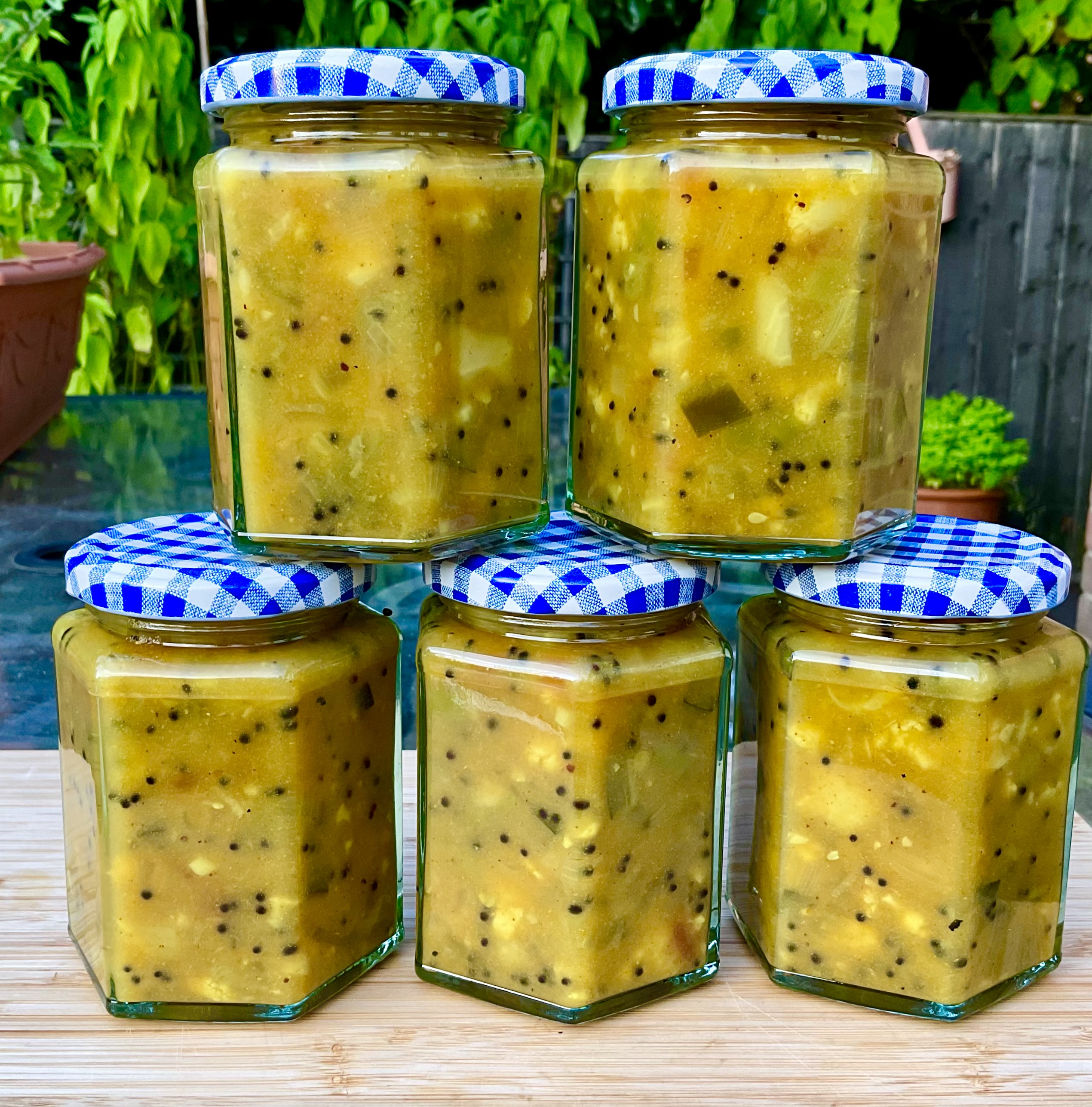
Piccalilli is perfect with cheese and bread, but it is also a great addition to bakes such as sausage rolls and pork pies. I have given links to those two recipes at the bottom of the page.

About this recipe
The recipe below makes a lot of piccalilli (about 10-12 medium jars) – this is a preserve I particularly like to make in bulk, with several jars for giving to people as edible gifts – but you can halve the ingredients for a smaller batch.
I have been making my version of piccalilli for several decades and for me it has a good balance of sweetness, sharpness and spicyness.
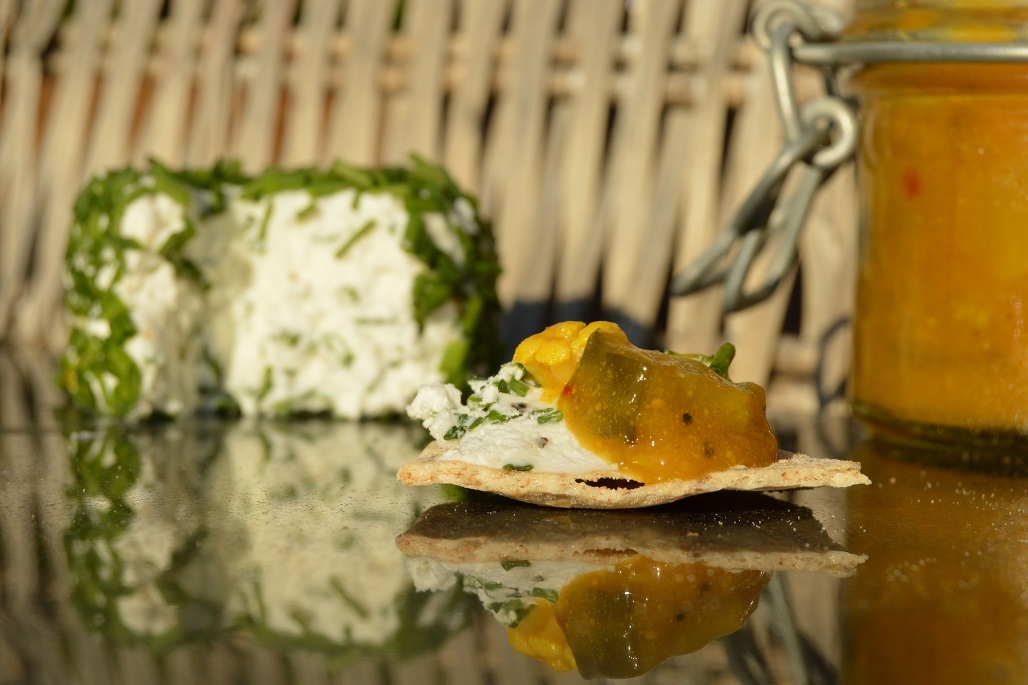
Changing the vegetables and the spices!
Although my recipe below is my go-to, I still like to vary it from time to time with different spices, sometimes I go more mustardy and other times less so.
Depending on what I want at the time, I use any of the following vegetables from the garden, chopped into small pieces:
- carrots
- radishes
- green tomatoes
- peppers
- kohlrabi
- fennel
- broad beans
I have even made it using with just onions and cauliflower and it’s still wonderful. Whatever combination of vegetables you go for, aim for around 2kg prepared vegetables per 1½ litres vinegar.
The spices can also be varied using around 1-2 tablespoons of any of the following, ideally lightly crushed:
- coriander seeds
- cumin seeds
- onion seeds
- fennel seeds
I often use mustard seeds in my piccalilli. They add a different heat than the mustard powder, as well as a light bitterness that is delicious here. You can use them whole, crush them a bit or heat them gently in a frying pan with a little vegetable oil until they start to pop and crackle: if you use them popped, you get an even better depth of flavour.
Allowing the piccalilli to mature
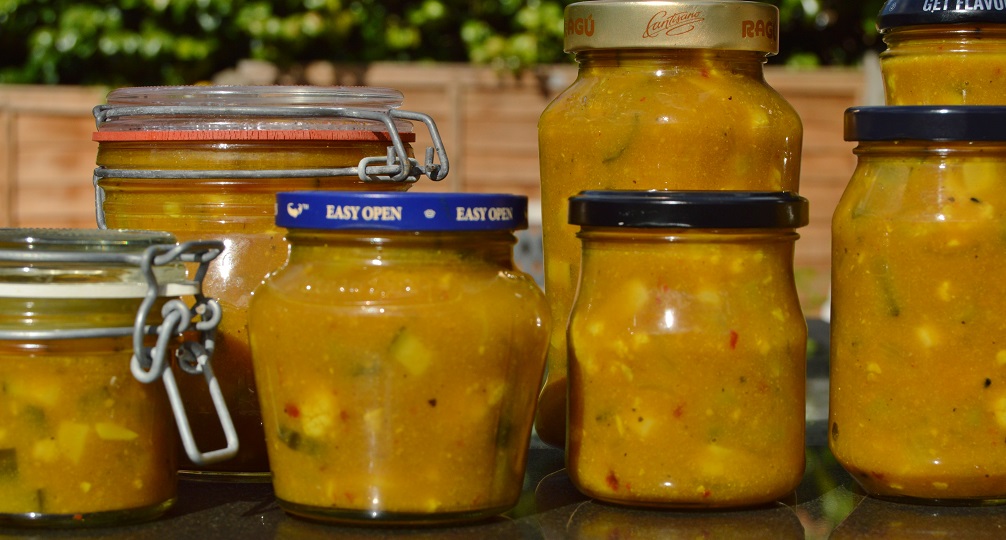
The piccalilli tastes good just after being made, but for the best flavour it needs about 2 months to mature before eating, by which time the vinegar will mellow and the flavours of the spices work their magic.
It will keep well for a year or so in a cool place out of sunlight, but once a jar has been opened, store it in the fridge and eat within a couple of months.
Recipe: piccalilli – makes about 4 litres (12 medium jars)

For the brine
- 80g fine sea salt
- about 1½ litres of cold water
Vegetables
- 500g cauliflowers, cut into very small florets (use the stalks, too, cut into small pieces)
- 500g onions or shallots (or a combination), peeled and chopped into small pieces – around 1cm or so
- about 300g cucumber, chopped into small pieces
- about 300g courgette, chopped into small pieces
- 300g french beans, topped, tailed and chopped into small pieces
Spiced sauce
- 1½ litres cider vinegar or white wine vinegar (cider vinegar gives a deeper shade of yellow overall)
- 8 large cloves of garlic, peeled and crushed
- 350g sugar (white, soft brown or light muscovado – or a mixture)
- 2 tablespoons black mustard seeds, optional
- 2 bay leaves
- 1 level teaspoon ground ginger
- 1 level tablespoon ground turmeric
- 1 level tablespoon cumin powder
- 1 red chilli, deseeded and finely chopped
- about ½ teaspoon finely grated nutmeg (about a dozen gratings!)
- 80g cornflour
- 50g mustard powder
(1) Put the prepared vegetables in a non-metallic bowl and sprinkle over the salt. Pour over the water (you just need enough to cover the vegetables) and stir well to dissolve it. Cover and leave for at least 3-4 hours, or overnight if you prefer.
(2) Rinse the vegetables in several changes of cold water and drain well: you don’t have to dry the vegetables, just get rid of the excess water.

(3) Put the vinegar, sugars, garlic, ginger, turmeric, cumin, nutmeg, bay leaves and mustard seeds (if using) into a large pan and bring to the boil.
(4) Add the drained vegetables, bring back to the boil and let them simmer gently over a medium-low heat for about 2 minutes.
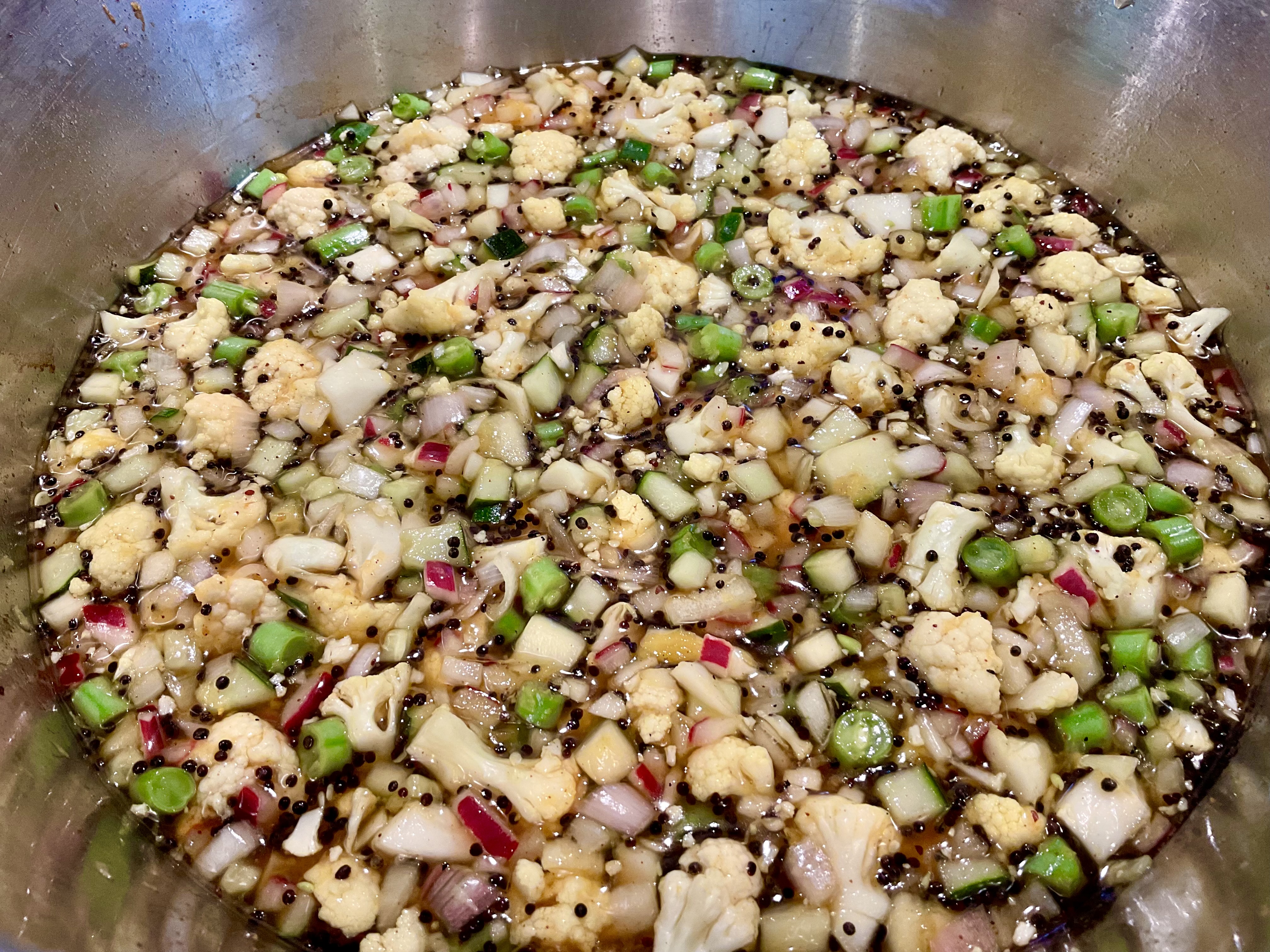
(5) Put the cornflour and mustard powder into a small heatproof bowl and mix in about a ladle of the hot vinegar to give a smooth paste. Add a little more vinegar, stirring to loosen it up. Pour this into the pan and return to the boil, stirring all the time. The vinegar mixture will have thickened a little.
(6) Simmer the mixture for about 5 more minutes, stirring occasionally: you should have a sauce that is that is about the consistency of unwhipped double cream. The vegetables will still have some bite to them. Fish out the bay leaves if you can find them and discard them.
NB: the sauce will thicken as the piccalilli cools down, so don’t make it too thick at this stage. However, you can add up to 50g or so more cornflour (mixed to a paste with a little of the hot vinegar mixture) but it needs a couple of minutes simmering once added.

(7) Pour the mixture into hot sterilised jars*, wiping down the rims and sides of the jars with a clean, damp tea towel if there are spillages. Put the lids on immediately.
NB: I find the easiest way to fill the jars is to ladle the piccalilli into a clean, sterilised measuring jug and then pour into the jars.
(8) Try to leave for at least 2 months to mature a little before eating, but it will still taste delicious if you don’t!
*to sterilise the jars: put cleaned and dried jars, with their lids, onto a baking tray in an oven preheated to about 100°C(fan) for 10-15 minutes
Recipe links


We are really looking forward to trying some pickles and chutneys with our own produce this year. I think this recipe will be on the to do list 😊 thanks
LikeLike
hello and welcome. Yes, it is always a treat when it comes to picking great fruit and veg. I hope you enjoy the piccalilli as much as I do. Best wishes
LikeLiked by 1 person
Hi I have made some Picilli and it isn’t thick enough is there anything I can do
LikeLike
Hi Jimmy, if you’d like it thicker, you can mix a little cornflour in cold water: maybe 2 teaspoons per 50ml water. Reheat the piccalilli mixture until simmering, stir the cornflour/water into the piccalilli and simmer for a minute or so until thick before bottling. I hope you enjoy it. Philip
LikeLike
This is an excellent recipe, though when I first did it the sauce was a bit loose for me so this time I reduced the vinegar slightly and upped the cornflour a little. I also added a small jar of Jalapeños!!! Does this make it PicaChili !!!
LikeLike
Love the picaChili idea! So pleased you enjoyed it
LikeLike