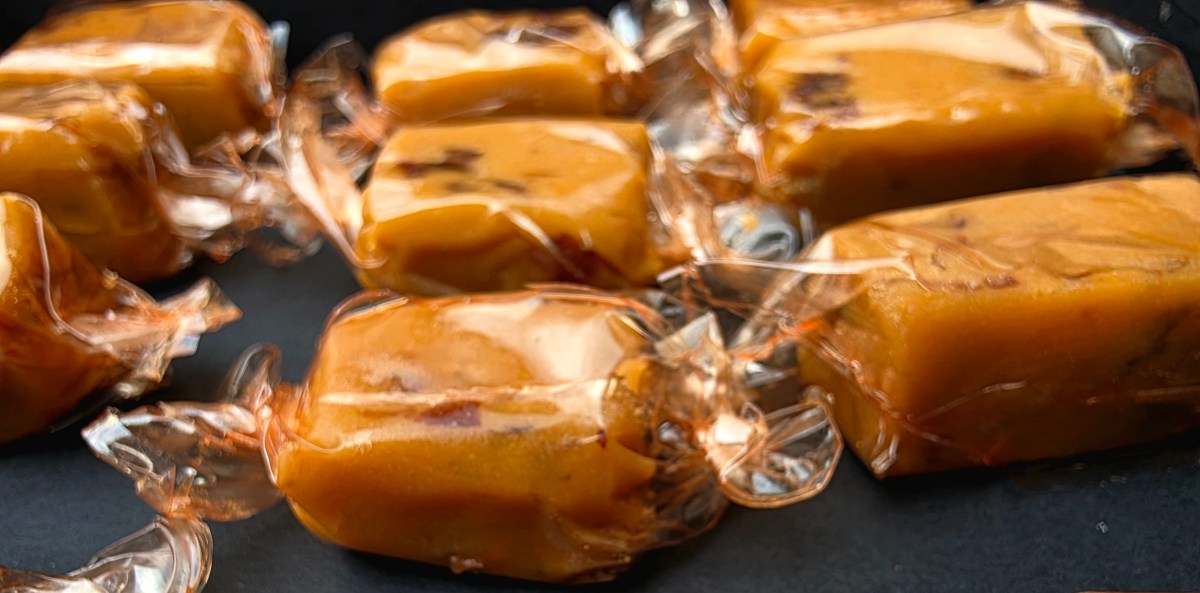
Now this might be a pretty niche post, but it was initially such a fun food science experiment!
I love to have a play in the kitchen and I have been meaning to make edible sweet wrappers for ages. I’ve now made them several times, so have been able to really get into them. I am also making these with my food students at school.
In this post, the wrappers are used for rum and raisin fudge: just don’t judge my fudge-cutting skills! However, the wrappers are great wrapped around all manner of sweet treats such as nougat, chocolate truffles, coconut ice, honeycomb pieces and the like. I have even made larger apple-flavoured wrappers to wrap around small sausage rolls!
About the recipe:
The recipe below is adapted somewhat from Heston Blumenthal’s recipe. It’s the glycerine in the recipe that is crucial for the texture and structure needed, as it acts as both a humectant and as plasticiser. Basically this prevents the wrappers from drying out and shattering, thereby allowing you to fold the wrappers easily.
My changes are:
- I have increased the proportion of glycerine from Heston’s recipe to make these wrappers easier to remove from their dishes. You also get a softer and slightly stretchier texture. You can reduce it further to about 1g of you want a more crackly texture but I find it is harder to remove the wrappers from their dishes.
- I flavour the water so that the wrappers are not tasteless. Now I loved Heston’s when I ate them the one time I was fortunate to dine in the The Fat Duck years ago, but at the time I did wonder why this brilliant chef hadn’t flavoured the wrappers to complement the sweets within!

Flavouring your wrapper:
This is entirely optional but I like the wrapper to bring something to the table other than just be a visual and textural quirk! This is a fun opportunity to pick a flavour that goes well with what will be inside the wrapper!
I infuse the water with good natural flavours that complement what they will be wrapped around and then once infused and cooled I strain it. My favourite flavours include:
- tea of choice (Earl Grey is particularly lovely, as is a fruit infusion tea): 1 bag
- coffee: about 3 teaspoons crushed coffee beans
- strawberry trimmings: about a handful
- mint leaves: about a handful
- lemon balm leaves: about a handful
- apple peel: from 1 apple
Avoid using fruits such as lemon, orange, grapefruit snd pineapple as the acidity in these affects the set of the gelatine. Similarly, don’t be tempted to add sugar as the wrappers become much more difficult to turn out.
You can also colour the wrappers if you prefer, although some of the flavour additions will add a natural tinge to the wrappers. If using artificial colours you just need 3-4 drops of colour of choice. For extra bling, spray a little edible gold or silver glitter dust on top, once the liquid has gone into the dishes to set!
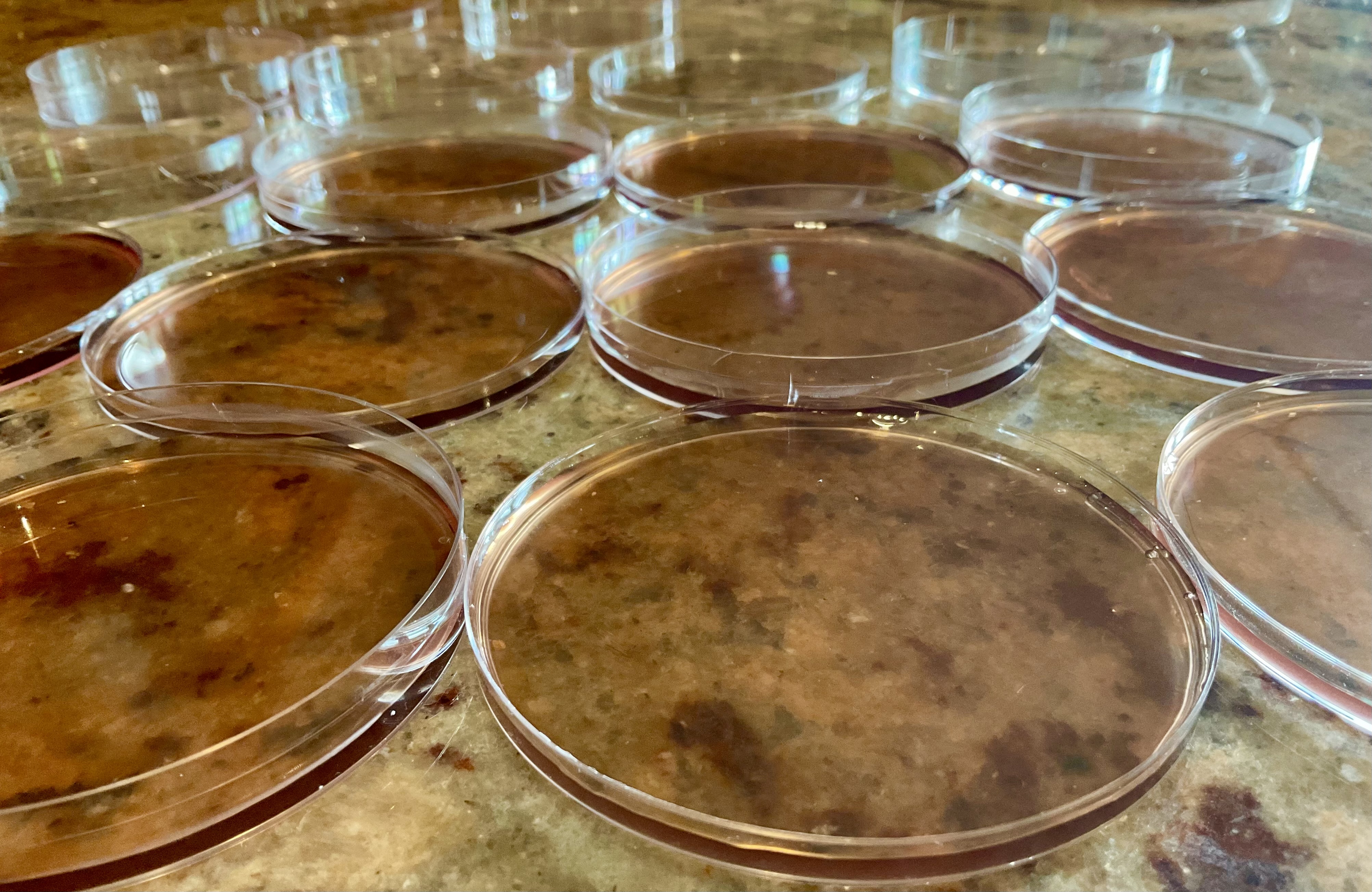
Using Petri dishes
It is easier to make these in plastic Petri dishes (available inexpensively on Amazon). You can use 9cm or 10cm ones (and their lids!). They are not only ideal for these wrappers, but they are quite fun to serve food in such as cheese and chutney, chocolate mousse, dips and the like!
If you don’t want to use Petri dishes, you can use flat metal cake tins or baking trays, or flat plates: and then trim them to use. But they do have to be flat!
Don’t grease the dishes/trays: they just need to be clean and dry.
Recipe: edible sweet wrappers – makes about 40

See above for info about the Petri dishes
- flavourings, see above (optional)
- 300ml water
- 8g powdered gelatine*
- 2g glycerine
*I have tried using vegetarian gelatine, using about 4g vege-gel powder as a starting point (less than meat-based gelatine owing to the agar-agar in the vege-gel) but have had mixed results. So a vegetarian version is very much a work in progress!
(1) Add the water to a small pan along with any flavourings you are adding. In the photo below, I used a strawberry tea infusion! Bring to a gentle simmer, stirring well to help the flavours, and turn off the heat. Leave to infuse and cool. Strain well.
NB: I infuse for about 10 minutes, so that the water takes on a little of the flavour for a subtle wrapper flavour rather than it being too “in your face”.

(2) Add the glycerine and gelatine to the pan, along with food colouring, if using. and whisk well. Heat over a low heat, whisking or stirring gently all the time: make sure it does not boil as this can affect the gelatine’s set.
(3) Add 2 teaspoons to each Petri dish and swirl so the base is fully covered. Tap gently to remove any bubbles and leave at room temperature for about 3-4 days. You can place a sheet of greaseproof on top to prevent flies from visiting if you wish!
NB: be patient here, as you want to be able to lift them from the edge (see below) but for the first day or so it will not have dried out enough to become wrapper-like: it will just be very thin, unfoldable jelly! I’ve even left these for almost a week, just forgetting about them until I am ready!
(4) Use the tip of a knife to ease out part of the set wrappers from the vertical edge of one of the dishes. This is the tricky part but I find that as some of the wrapper has set a little up the vertical edges, lightly pressing the knife tip down the edge a few times helps get under the wrapper, and then once enough is eased free you can lift the rest of the wrapper easily. If it does start to tear, try again further around the dish: like clingfilm, if it tears when peeling it off the dish, it becomes a nightmare to work with!
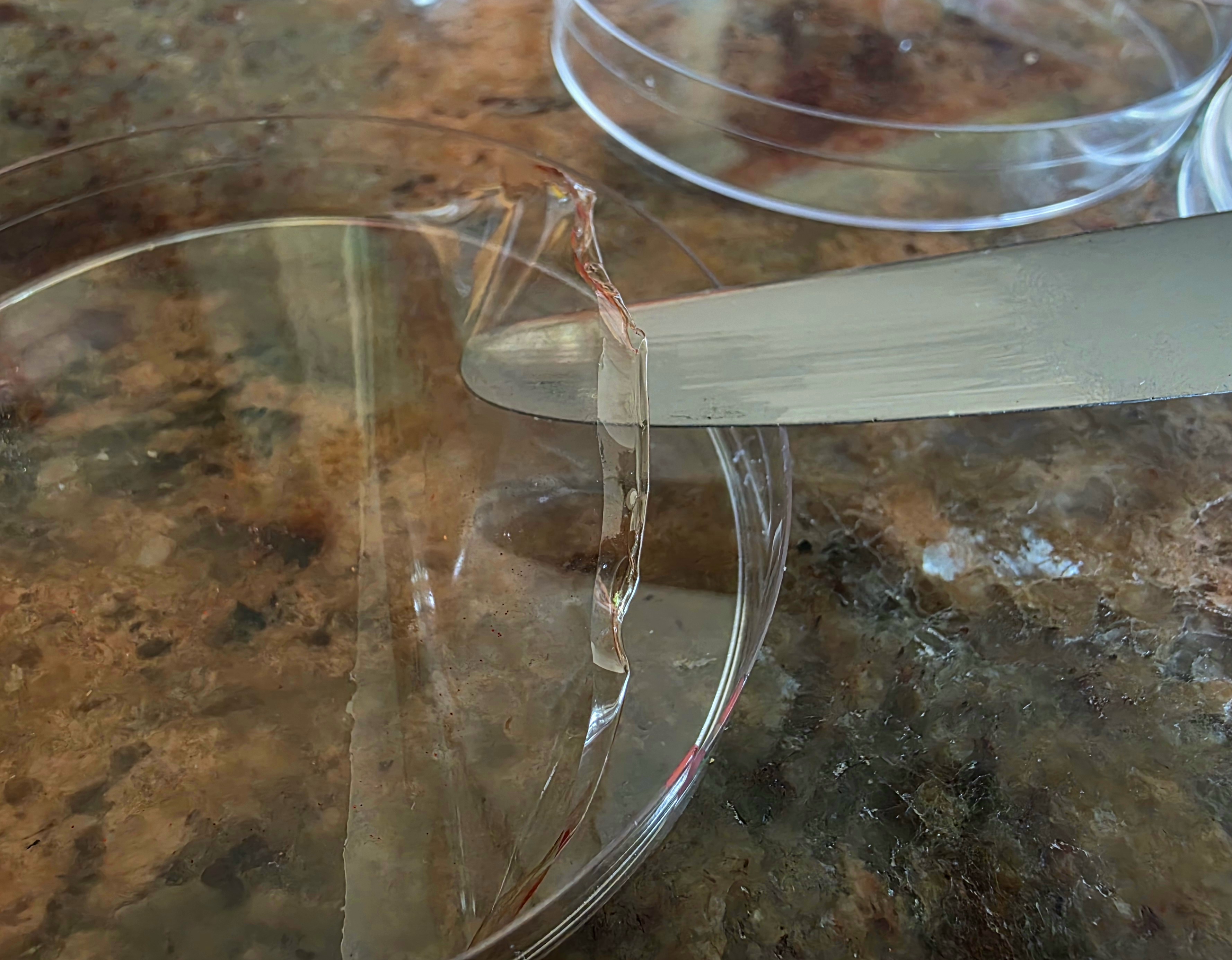
(5) Once you’ve peeled part of the wrapper away from the edge, you will then be able to prise off a whole wrapper: it is quite robust so you don’t need to be too gentle with it. You can trim it with scissors if you wish, but I don’t normally bother.
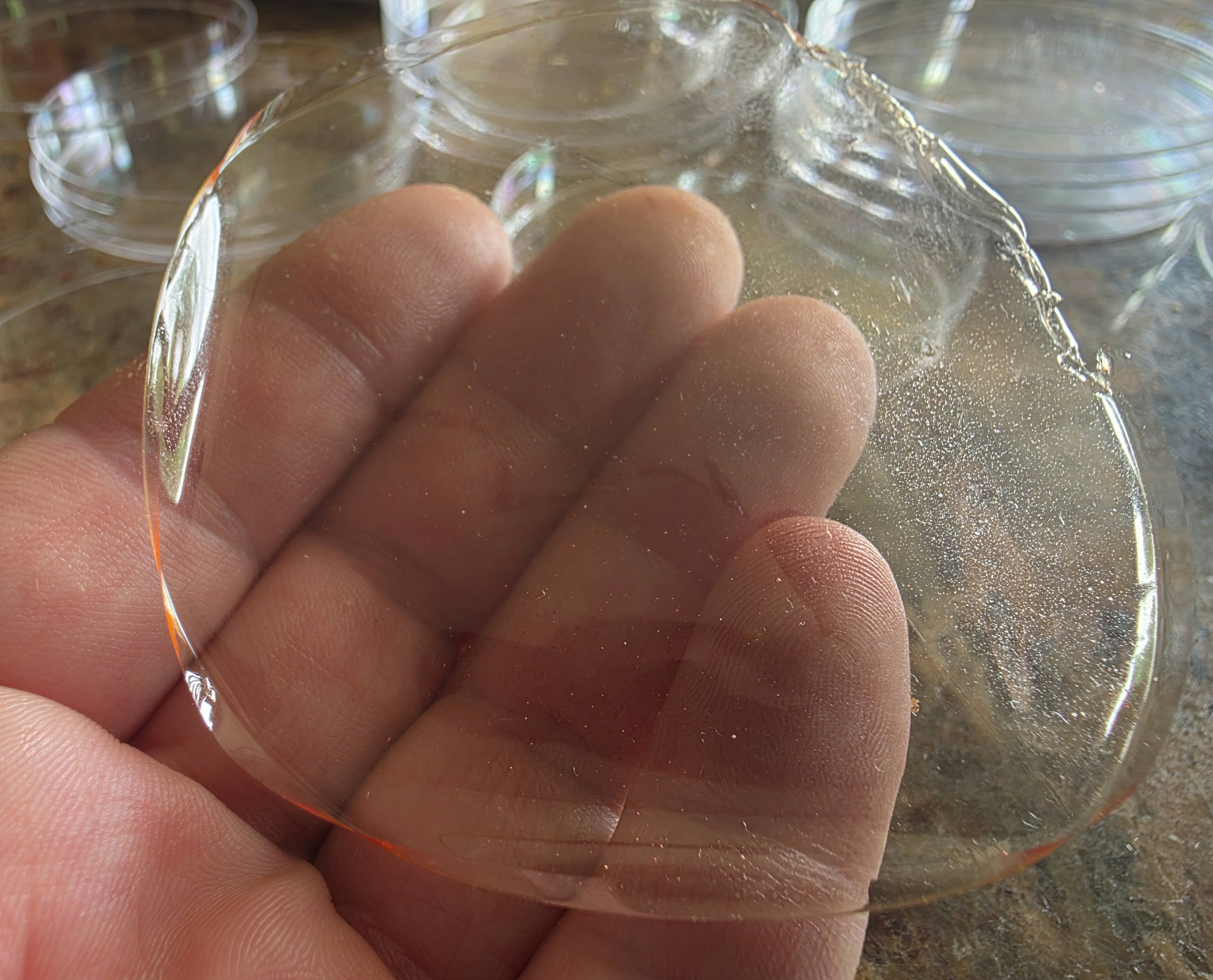
(6) Repeat for the other wrappers and use to wrap up your sweet treats. They will store well on the fridge without the wrappers disintegrating: I left some wrapped fudge in there for about 2 weeks and they were fine, just a little softer.


Oh, this is right up my alley! Can you suggest other ways to use the wrappers please?
LikeLike
Larger wrappers around sausage rolls and pork pies, it they are at their best when small around sweets, and even small biscuits
LikeLike
Well, you just KNOW I am smiling from first to last word of this post!!!! oh, how cool is this????? PETRI DISHES, for heaven’s sake! you outdid yourself here!!!!!!
LikeLiked by 1 person
Let’s spread the joy of Petri dishes around the world
LikeLike
what an interesting idea Phil! I would never have thought of making these. Such fun!
cheers
sherry https://sherryspickings.blogspot.com/
LikeLike